

Lesson 12 - Build Your Brand
Learn how to build your brand to stand out in a competitive job market.
Estimated Read Time: 1,5 - 2 Hours
Learning Goals
In this lesson, you will learn to:
Personal Brand:
- Build meaningful professional networks in the retail analytics space and beyond
- Establish ongoing LinkedIn presence with strategic content planning
In today’s uncertain job market – with hiring freezes, layoffs, and tighter budgets – companies are still hiring. But the bar is higher. Employers are prioritizing candidates who don’t just say they know something – they demonstrate it. They want proof of:
-
Real-world experience
-
Business impact
-
Strong personal branding
So far you’ve built your tech skills I Tableau and AI; you’ve developed business acumen and you’ve developed a stellar portfolio to showcase your skills. This lesson is your roadmap to the third pillar: building a credible, strategic online presence that makes you memorable to the right people.
First things first: first of all, you need to be
technically strong. No matter what your field is, make sure that you know your
stuff.
Before investing time in visibility, ensure your technical foundation is rigorous – hiring managers first look for analyses that are methodologically sound and conclusions that are defensible.
Branding is effective only when it showcases genuine expertise.
1. The 3 Questions That Anchor Your Brand
Video 1 – Build a Personal Brand That Gets You Hired
Branding isn’t about being everywhere. It’s about clarity and consistency. Start by answering:
-
Who do I want to be seen as?
Define a narrow niche or the specific business problem you solve. Are you the “go-to” for data analytics? A conflict resolution expert? A creative technologist? Pick a lane. The more specific, the better. -
Who is my audience?
Hiring managers in mid-sized companies? Startups? Teen creators? Tech leads in finance? Knowing this defines your messaging and your platform. Name the hiring managers, teams or customers whose attention you need. -
Where is my audience active?
-
LinkedIn: Professionals, recruiters, leaders
-
Twitter/X: Tech and product discussions
-
Instagram/TikTok: Creatives, early-career audiences
-
GitHub/Dribbble/Behance: For showcasing work
-
“If you speak to everyone, you speak to no one.” — Seth Godin
Tailor your message to where your audience lives and how they consume content (short videos, long posts, infographics, etc.)
2. The 3-Part Branding + Networking Cycle
Video 2 – 3 Crucial Steps of Branding and Networking on LinkedIn
Once your foundation is set, here’s your repeatable strategy. We will continue with LinkedIn moving forward:
2.1. Build a Clear, Warm, and Complete Profile
Your profile should:
-
Have a friendly, approachable photo
-
Use the cover/banner image to communicate your expertise (e.g., workshops, interviews, your product, tagline)
-
Include a headline that says what you do, for whom, and how (e.g., “Helping analysts land top jobs through SQL interview prep”)
-
Feature real content: case studies, interview guides, short videos
Tip: Use the featured section to showcase high-impact work – like a portfolio item, talk, article, or tutorial. The portfolio case study that you developed in previous lesson should be posted here.
2.2. Make Meaningful Connections
Don’t spray and pray. Connect with:
-
People in your target companies
-
Other job seekers (they often refer others when they get hired)
-
Alumni or people in your community
When you connect, always personalize the invite. A simple:
“Hi [Name], I admire your work in [area]. Specially your post on [topic] resonated with me a lot. I would love to connect.”
2.3. Be Present: Comment, Post, and Engage
What keeps people top of mind? Repetition and relevance.
-
Comment on others’ posts thoughtfully (not just “Great post!”)
-
Post 2–3x per week. Alternate between:
-
Insight posts — concise findings or actionable recommendations;
-
Process posts — brief ‘behind-the-scenes’ notes showing how you solved a problem;
-
Reflection posts — lessons learned, mistakes and career takeaways that humanise your work. Prioritise clarity and signal the business outcome
-
Reflections on job search or career growth
-
-
Content Format: Switch between text, images and videos.
- Have short-to-medium length posts with appropriate (but not too many) tags
-
Short videos (approximately 60–90 seconds) are especially effective: they humanise your brand and can be produced with minimal editing.
- Have 5+ images with people helps increase reachability.
“Visibility beats ability. If they don’t see you, they won’t choose you.” – Anonymous (Ironically)
Refer to some content creation ideas in the attachment below:
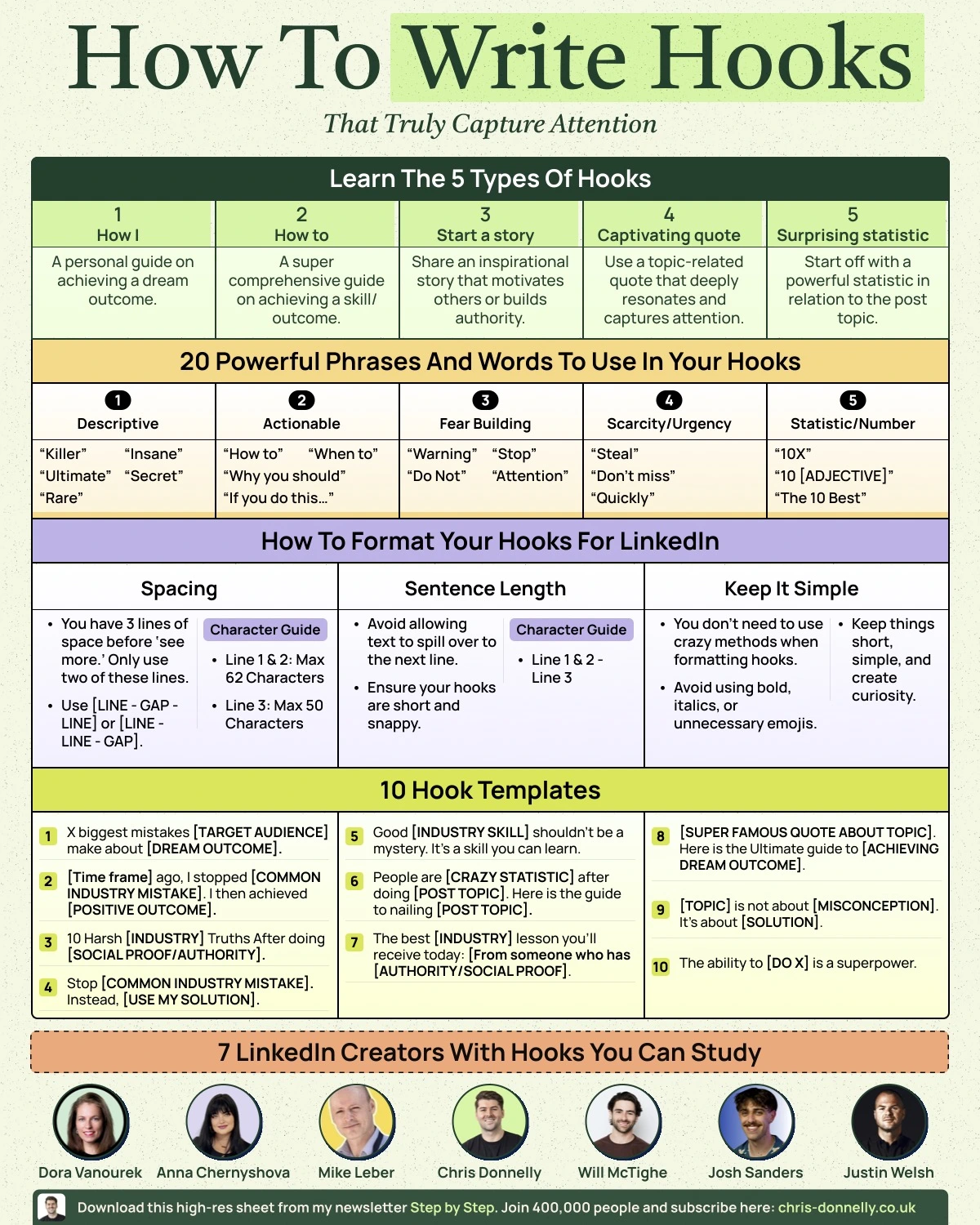
3. Real-Life Examples And Guidelines to Building Your Brand
Video 3 – Real Examples and Guidelines for Visibility
You saw in the video above how professionals like Dawn, Gossia, Brittni, and Laura stood out – not just because they were good at what they do, but because they showed up, consistently and clearly.
Each one:
-
Had a defined niche
-
Used their visuals (photo + cover) effectively
-
Posted regularly, either original insights or useful content
-
Was top of mind because they stayed on our feed
You don’t have to be famous. You just need to show up with intention.
This is not arbitrary activity: repeated, relevant exposure places you top-of-mind — the same advertising principle that creates product recall — so regular, useful presence compounds into credibility over time.
4. Pro Tips from Branding Coaches
-
Justin Welsh (LinkedIn Coach):
Use a content framework like “Build Once, Share Often.” Write a long post, then repurpose into a quote, carousel, or video. [1] -
Austin Belcak (Job Search Coach):
Most people network when they need something. Flip it. Show up, give value, comment, and the referrals will come. [2] -
Katelyn Bourgoin (Brand Positioning Expert):
You’re not competing for attention with other job seekers. You’re competing with everything else in their feed. [3]
5. Final Words
Treat personal branding as cumulative and long-term: visibility compounds; continue to curate, publish and engage after you secure a role, because ongoing presence generates future opportunities.
Summary
In this lesson, you learned to:
-
position yourself clearly in the job market by defining what you want to be known for, who your audience is, and where to reach them.
-
build a visible, credible professional presence through consistent posts, concise case studies, and striking visuals — treating your portfolio as the centrepiece.
-
use strategic engagement (comments, featured content, short videos) to stay top-of-mind with hiring managers, while maintaining a long-term perspective on brand building.
Suggested Readings & References
Exercise
Estimated Time to Complete: 2-3 days
Note!
This is an intense Exercise with long-lasting impact on your job search. Do not be overwhelmed or rush through it.
If you’re totally new to LinkedIn and outreach, it is recommended to get your drafts reviewed by your mentor before sending a message or posting online.
All the Best!
Task 1 : LinkedIn Setup
- If not done already, setup your Linkedin. LinkedIn Profile Checklist:
- Professional headshot and cover picture
- Compelling headline (not just job title)
- Summary section mentions data analytics
- Experience section includes relevant projects
- Include Cliqz Search Analytics Project
- Skills section includes Tableau, data analysis, etc.
- Recommendations from colleagues/instructors
Task 2: LinkedIn Content Calendar
Part A: Content Planning
Use the knowledge you gained (learnings, insights, frustrations) on cliqz dataset, Tableau, data, AI tools etc. to create 5 LinkedIn posts to share over the next 4-5 weeks. Use the content creation techniques taught in the lesson. Have a variety of content and a mix of text-, image- and video-based posts.
Part B: Content Scheduling
Your Task:
- Choose your posting schedule. Release one post today and the others once per week (pick a time where your audience will be active – also avoid full hours as a lot of traffic is already generated at that time). Do some research on best posting times.
- Set up your posting system:
- Calendar reminders
- LinkedIn scheduling tool (recommended)
- Other method: _______________
Part C: Engagement Strategy
Your Task: Plan how you’ll maximize engagement:
- Engagement plan: Commit to responding to comments within _____ hours
- Reflections: How will you note the lessons learnt after each release and tweak future posts?
Task 3: Strategic Networking & Outreach
Part A: Target Company Research
Your Task: Research and identify your target companies:
- 5 Major Search Companies including at least one in your region
- 5 Companies of Your Choice in an area where you’d like to work
Part B: Outreach
Your Task: Create personalized outreach messages
- Send LinkedIn Connection Request with appropriate message (Warning: do not sell yourself, do not pitch yet)
- For contacts already connected, share portfolio. Ask an appropriate question (Note: this is a conversation starter – still not a pitch)
Submission Guidelines
Submit your solution as a document with a link to your LinkedIn. Also include links to your post and screenshots of scheduled posts and messages to the connections.
Filename Format:
- YourName_Lesson12_PersonalBrand.docx
When you’re ready, submit your completed exercise to the designated folder in OneDrive. Drop your mentor a note about submission.
Important: Please scan your files for viruses before uploading.
Submission & Resubmission Guidelines
- Initial Submission Format: YourName_Lesson#_…
- Resubmission Format:
- YourName_Lesson#_…_v2
- YourName_Lesson#_…_v3
- Rubric Updates:
- Do not overwrite original evaluation entries
- Add updated responses in new “v2” or “v3” columns
- This allows mentors to track your improvement process
Evaluation Rubric
| Criteria | Exceeds Expectations | Meets Expectations | Needs Improvement | Incomplete / Off-Track |
|---|---|---|---|---|
| Task 1: LinkedIn Setup | Profile is polished and professional: strong headshot and banner, compelling headline, clear and concise summary, all projects (including Cliqz) showcased with impact, skills section sharp and complete, at least one recommendation included. | Profile is complete and professional: headshot, banner, headline, summary, projects, and skills included; content communicates “data analyst” identity clearly. | Profile is partially complete: missing one or more major elements (e.g., project, summary, banner), or lacks coherence. | Profile is bare, incomplete, or missing entirely. |
| Task 2A: Content Planning | Five posts are planned with variety (text, visuals, video) and depth; each connects learning from cliqz/Tableau/AI/Business with a personal voice. Strong alignment with personal brand. | Five posts are planned and clearly linked to course learnings; includes at least two different formats; shows thoughtful effort. | Fewer than five posts, or posts are generic / vague, with little link to course or personal brand. Or thoughtlessly created by AI | No content calendar or irrelevant/unusable posts. Or thoughtlessly created by AI |
| Task 2B: Content Scheduling | Schedule is specific, consistent, and realistic; tools are chosen thoughtfully; clear evidence of long-term planning (calendar reminders, automation). | Schedule is clear and feasible (days/times chosen, reminders set); at least one method for staying on track is documented. | Schedule is vague, incomplete, or unrealistic; missing method for accountability. | No schedule provided. |
| Task 2C: Engagement Strategy | Engagement plan is concrete (response within set hours, reflection routine in place, clear metrics to track improvement). Shows awareness of audience-building. | Engagement plan is practical: commits to responding and noting lessons learned; demonstrates intention to grow. | Engagement plan is weak or superficial (e.g., “I will respond to comments” with no timing/structure). | No engagement plan. |
| Task 3A: Target Company Research | Research is thorough: 10+ companies listed, each with rationale (why chosen, relevance to data analytics); demonstrates career clarity. | 10 companies listed (5 retail + 5 chosen); appropriate and relevant. | Fewer than 10 companies or choices are random/irrelevant. | No target company research. |
| Task 3B: Outreach | Outreach messages are personalized, thoughtful, and respectful; balance professionalism with genuine curiosity; portfolio shared strategically. | Outreach messages are professional, polite, and personalized to each contact; no pitching. | Outreach messages are generic, copy-paste style, or risk coming across as spam or thoughtlessly created by AI | No outreach attempted. |
| Submission Quality | Document is polished, professional, and well-structured; includes LinkedIn link, post links/screenshots, schedule, engagement plan, target company list, and outreach samples. | Document is complete and clear; includes all major elements (profile link, posts, screenshots, schedule, companies, outreach). | Submission is missing 1–2 major elements, poorly structured, or hard to follow. | Submission missing or irrelevant. |
Contact
Talk to us
Have questions or feedback about Lumen? We’d love to hear from you.